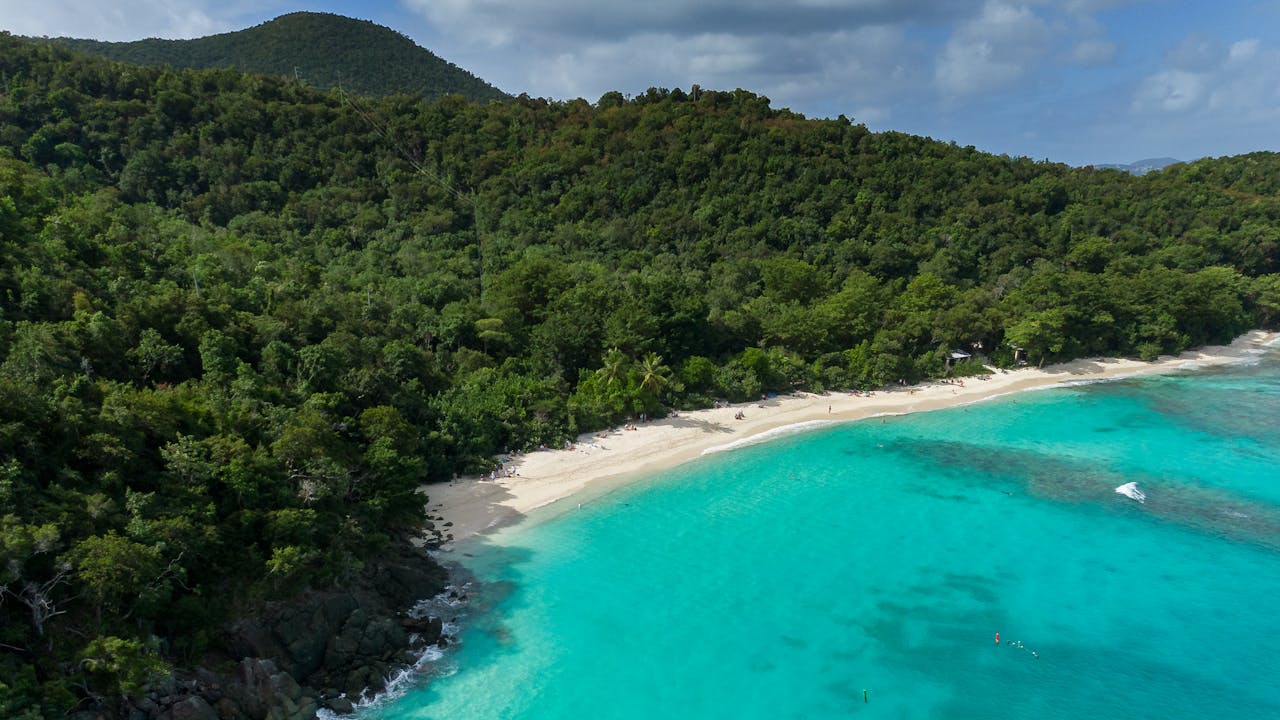

Swimmers and beachgoers on St. Thomas face dangerous rip current conditions today as the National Weather Service has issued a life-threatening rip current statement affecting north and east-facing beaches across the territory.
The warning remains in effect from six a.m. through late evening, with meteorologists cautioning that even experienced swimmers could be swept away from shore into deeper water where returning to safety becomes difficult. The advisory covers beaches on St. Thomas, St. John, Culebra, St. Croix, and adjacent islands.
What’s Causing the Dangerous Conditions
A combination of weather patterns has created hazardous sea conditions throughout the Atlantic waters surrounding the territory. A weak long-period northeasterly swell is expected to spread across Atlantic waters late today through Thursday evening, layering onto locally generated wind-waves and creating what forecasters describe as “confused seas.”
These intersecting wave patterns and currents significantly enhance the risk of rip current development along the exposed northern and eastern shorelines, where the territory’s beaches face open Atlantic waters.
What Swimmers Should Know About Rip Currents
Rip currents are narrow, fast-moving channels of water flowing seaward from the shore. They form when waves pile water onto the beach faster than it can drain back out naturally, forcing the water to return to sea through concentrated corridors.
The danger lies in their deceptive power. A swimmer caught in a rip current who panics and fights directly against the flow can quickly exhaust themselves. Even strong swimmers risk being pulled offshore before realizing the current’s grip.
Guidance for Beach Visitors
Residents and visitors are strongly advised to avoid swimming on north and east-facing beaches today entirely. Those who choose to enter the water should exercise extreme caution and never swim alone.
If caught in a rip current, swimmers should not fight directly toward shore. Instead, experts recommend swimming parallel to the beach to escape the current’s grip, then turning toward shore at an angle. Alternately, floating and allowing the current to carry you seaward before swimming along the coast and returning at a safer location can prove effective.
Monitoring Conditions
The National Weather Service continues to monitor atmospheric and oceanic conditions. Beachgoers should check official weather updates before heading to the water and heed all posted warnings and advisories from local authorities.
South and west-facing beaches may offer safer alternatives for water recreation, though visitors should still exercise reasonable caution and be aware of current conditions.